October 24, 2026
The ferry is still dark against the sky when the first gull lands on the bollard. Somewhere behind you a winch starts up, and the water takes on that grey-green color it only has before the sun clears the breakwater. You have a coffee in one hand and a camera in the other, and you are standing in one of four places people usually stand to watch a harbor wake up. Which one you chose — and why — shapes everything you will see in the next hour.
A harbor is not a single view. It is a cluster of viewpoints, each with its own rules, its own hazards and its own particular way of making ships look good. Here is how the four most common ones actually compare.
What Actually Changes Between Viewpoints
Before comparing them one by one, it helps to know what you are comparing. Five things vary far more than most visitors expect.
- Access — how far you walk, whether you drive, whether a schedule controls your timing.
- Safety — railings, wet surfaces, wind exposure, whether help is nearby.
- Angle — the height and direction you shoot from, and how that flatters or flattens a vessel.
- Crowds — who else is there, when, and what they are doing.
- Light — which direction you face at sunrise and sunset, and whether you can move to fix it.
No single spot wins on all five. That is the whole point of choosing.
Pier: The Easy, Generous, Crowded Option
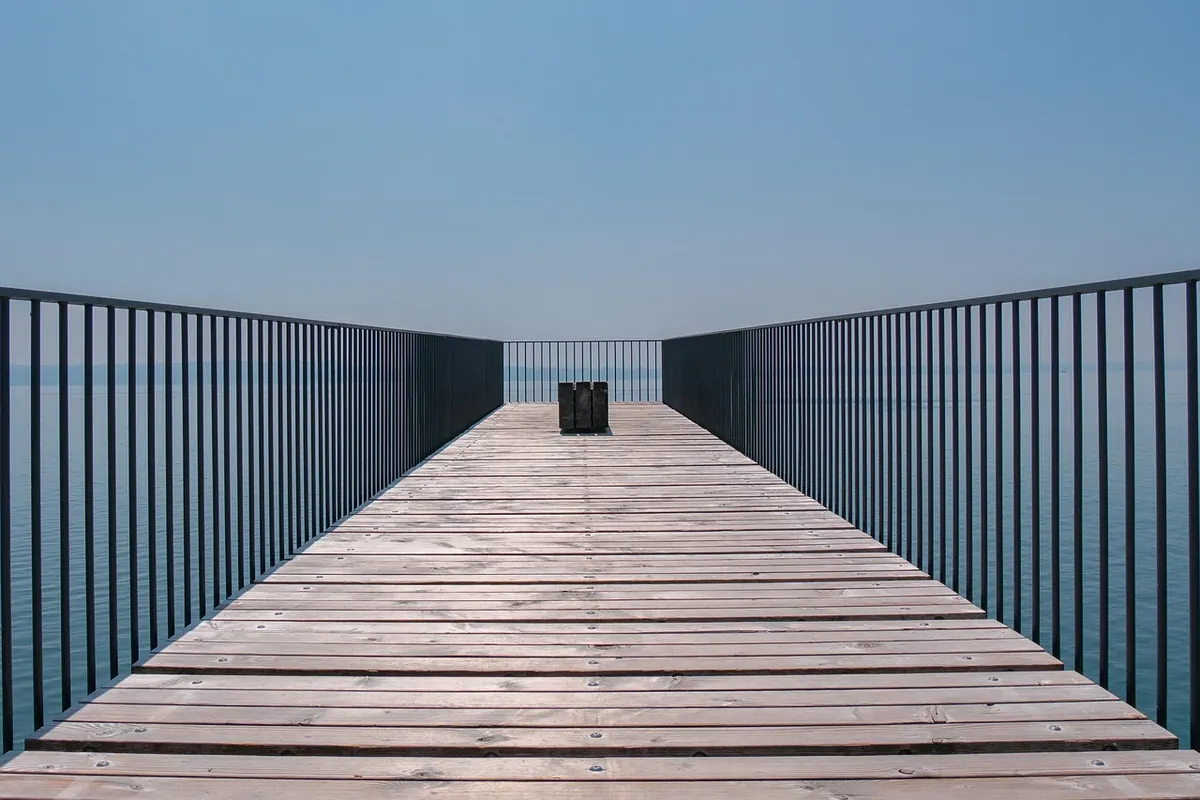
A pier is usually the least demanding viewpoint in the harbor. It is flat, paved or planked, close to town, and rarely asks more of you than a short walk from a parking area. If you are travelling with someone who uses a wheelchair, pushing a stroller, or carrying more camera bag than you should, the pier is almost always the answer.
The trade-off is proximity to water at eye level, which is both the pier's gift and its problem. You get low, intimate angles: a fishing boat's bow looming, reflections sliding under the pilings, the flat plane of the harbor instead of a map of it. You also get wet planks, mooring lines under tension, bicycles, delivery vans, and anglers who have occupied the same six meters of railing since four in the morning. Watch for hooks on the back cast, and never step over a line that runs from a bollard to a boat — it can come taut without warning.
Crowds and timing on a pier
Piers fill up in a predictable rhythm. Early morning belongs to anglers and people walking dogs. Mid-morning brings the first tour groups. Late afternoon and sunset are the busiest hours by far, especially on a weekend in summer and especially at the end of the pier where the view opens up. Arrive forty minutes before sunset and you will have space; arrive ten minutes before and you will be composing around someone's shoulder.
Cliff: The Long View, Earned on Foot
Cliffs give you height, and height does something specific to a harbor: it turns chaos into order. From above, you can read the whole thing at once — the ferry lane, the fish quay, the container stacks, the little patch of water where every boat seems to turn. A moderate telephoto lens compresses the layers beautifully, stacking tugboats and cranes into a single dense frame.
Access is the cost. Expect stairs, uneven paths, loose gravel, and a stiff breeze that appears the moment you clear the trees. Safety deserves real attention here: cliff edges crumble, barriers are sometimes absent, and gusts near an exposed headland can knock you off balance. Keep back from the lip, keep children and dogs on the inland side, and do not chase a better angle by stepping past a fence or a warning sign. Wind also makes long exposures difficult; brace your camera against something solid or accept a higher shutter speed.
Photographically, cliffs reward patience. The best light usually comes sideways — early morning or late afternoon — so the harbor's edges and roofs pick up shadow and shape. Midday flattens everything. Bring a light jacket even in warm weather, because the temperature drops noticeably at height.
Ferry: The View That Moves
Schedules rule a ferry. You check a timetable, you buy a ticket, you turn up, and for the length of the crossing you have a viewpoint that no fixed location can match — because it changes constantly. Ferries take you out among the traffic rather than watching it from the shore, and they hand you angles that are simply impossible from land: a harbor seen from the water, its cranes and church towers lined up behind you, the wake curving away.
Access is easy once you are aboard, but the timing is not yours. Crossings get cancelled in bad weather, the best deck can be closed, and you may end up shooting through salt-streaked glass. Sit or stand on the open deck if you can, keep a microfiber cloth in your pocket, and be ready in the two or three minutes when the boat swings around a headland or passes a moored ship close enough to fill the frame.
Safety on a ferry is mostly about behaving like a passenger rather than a photographer. Stay behind the marked lines, keep your bag off the deck where people walk, hold the rail on stairs, and do not climb onto anything to get above the crowd. On commuter crossings, the rush hour is genuinely crowded and the vehicle deck is noisy and fumey — the middle of the day is calmer and the light is better anyway.
Breakwater: The Raw Edge of the Harbor
Breakwaters are the least comfortable and often the most rewarding. They put you out where the harbor meets open water, with the lighthouse at your shoulder and swell breaking on the seaward face. The pictures are elemental: spray backlit by a low sun, wet stone, a single figure in yellow oilskins.
They are also the viewpoint where safety is not a formality. Many breakwaters are closed to the public, especially in commercial ports, and access can be restricted without much warning. Where walking is permitted, conditions change fast — waves overtop the structure in weather that looks manageable from shore, rocks stay slick long after the rain stops, and there is no shelter and often no quick exit. Never turn your back on the sea, check the forecast and tide before setting out, and treat any barrier or closure notice as final rather than advisory.
Crowd levels are the lowest of the four, which is part of the appeal. It is also why you should tell someone where you are going and when you expect to be back.
Side by Side: Which One to Choose
- Best for low, dramatic boat portraits: the pier.
- Best for a full harbor panorama: the cliff.
- Best for changing compositions without moving your feet: the ferry.
- Best for rough water and lighthouse shots: the breakwater, conditions permitting.
- Best for limited mobility or a tight schedule: the pier.
- Quietest at sunset: usually the breakwater, then the cliff.
- Busiest at sunset: almost always the pier.
A good harbor viewpoint is not the one with the best view. It is the one whose compromises you are happy to accept on the day.
A Practical Plan for a Harbor Viewing Day
- Check wind, tide and forecast the evening before; a windy day ruins the cliff and closes the breakwater.
- Look up ferry times first, then build the rest of the day around them.
- Start on the pier early, while anglers and light are still working in your favor.
- Move to the cliff late morning, when the harbor below has enough activity to fill the frame.
- Take the ferry across in the middle of the day, and sit outside.
- Finish at the breakwater only if access is open and the sea is calm — otherwise return to the pier for sunset.
Carry grippy shoes, a light windproof layer, water, and a cloth for the lens. Leave the tripod at home for the ferry and bring it for the cliff. And build in a buffer: harbors run on their own clock, and the best ten minutes of light rarely arrive when you planned them.
Photo: ChiemSeherin / Pixabay