October 28, 2026
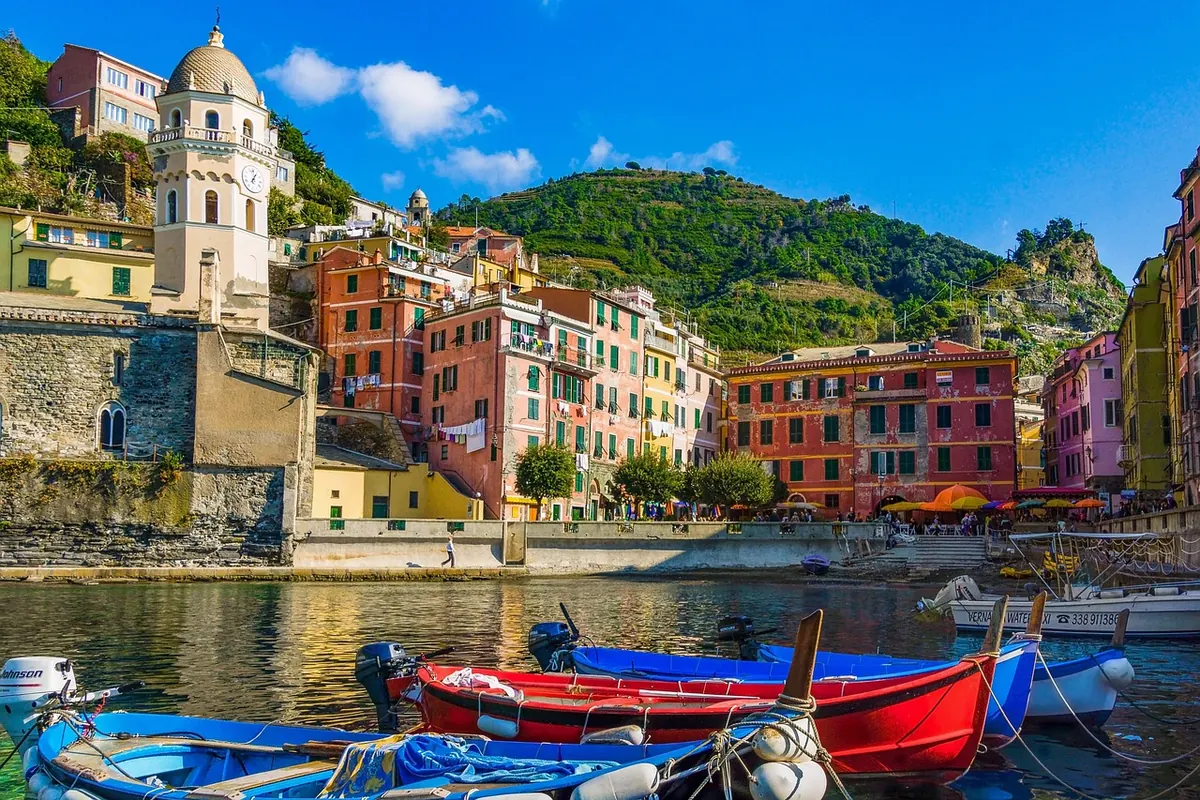
Stand on the quay at ten in the morning and the harbor is a hard, bright blue. Come back after lunch, once clouds have stacked up behind the breakwater, and the same basin looks like wet slate. Nobody poured anything into the port. The water did not change. What changed is the light reaching your eyes, and the amount of silt, algae and sky reflected in the top few centimeters of the surface.
Harbor water is one of the most readable things in a port, once you know what you are looking at. It tells you where the channel runs, where the bottom shoals up, what the weather did last night, and which way the tide is pushing. You do not need instruments. You need a bit of patience and a few rules of thumb.
Sunlight Does Most of the Work
Sunlight looks white, but it is a mix of colors. When that mix enters water, the water starts swallowing it from the red end of the spectrum. Reds and oranges fade within the first couple of meters. Yellows and greens survive a little deeper. Blues travel furthest before being absorbed.
That is the whole trick behind a deep blue harbor: the blue is what is left over, bouncing back to you after the other colors have been eaten on the way down and the way up. Pure water is faintly blue even in a glass, for the same reason.
Two consequences follow, and they explain most of what you see from a pier.
- The higher the sun, the more color you get. Around midday, light drops steeply into the water and penetrates. Early morning and late afternoon, light comes in at a shallow angle and mostly bounces off the surface — which is why harbors look silver, pewter or washed-out at those hours.
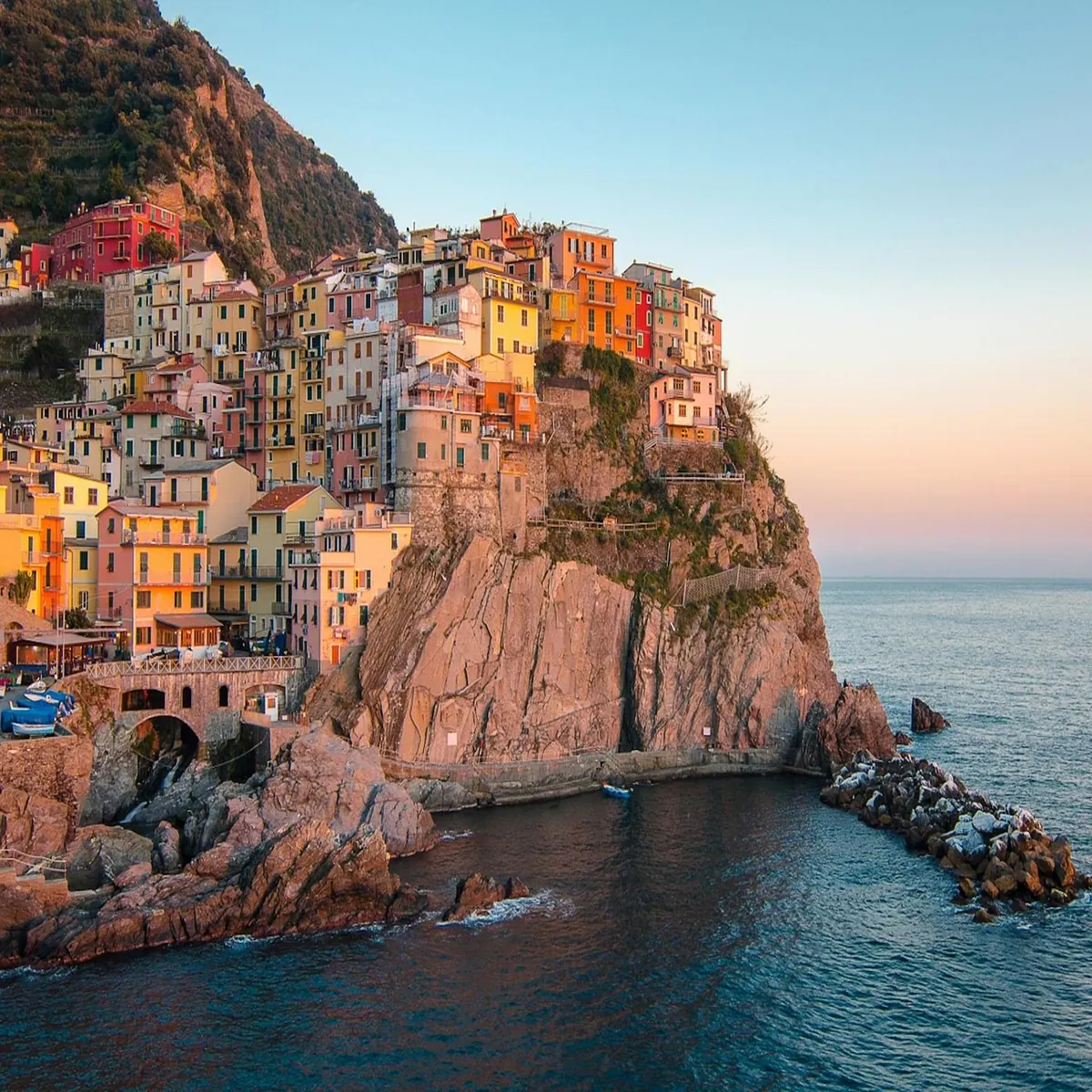
- The surface works as a mirror. At a grazing angle, water reflects a large share of the sky above it. A blue sky gives you blue water; a white overcast gives you white-gray water; a sunset gives you a harbor the color of the sunset.
Depth Changes Everything
Two harbors can hold the same water and look nothing alike, because color depends on what the light hits before it comes back.
Shallow water over pale sand or light rock throws a lot of light back up, and the result is that bright turquoise you see in Mediterranean coves and Caribbean anchorages. The same depth over dark mud, weed or old pilings gives you olive, bottle-green or a dull gray-green. The water is not dirtier. The bottom is simply darker and less reflective.
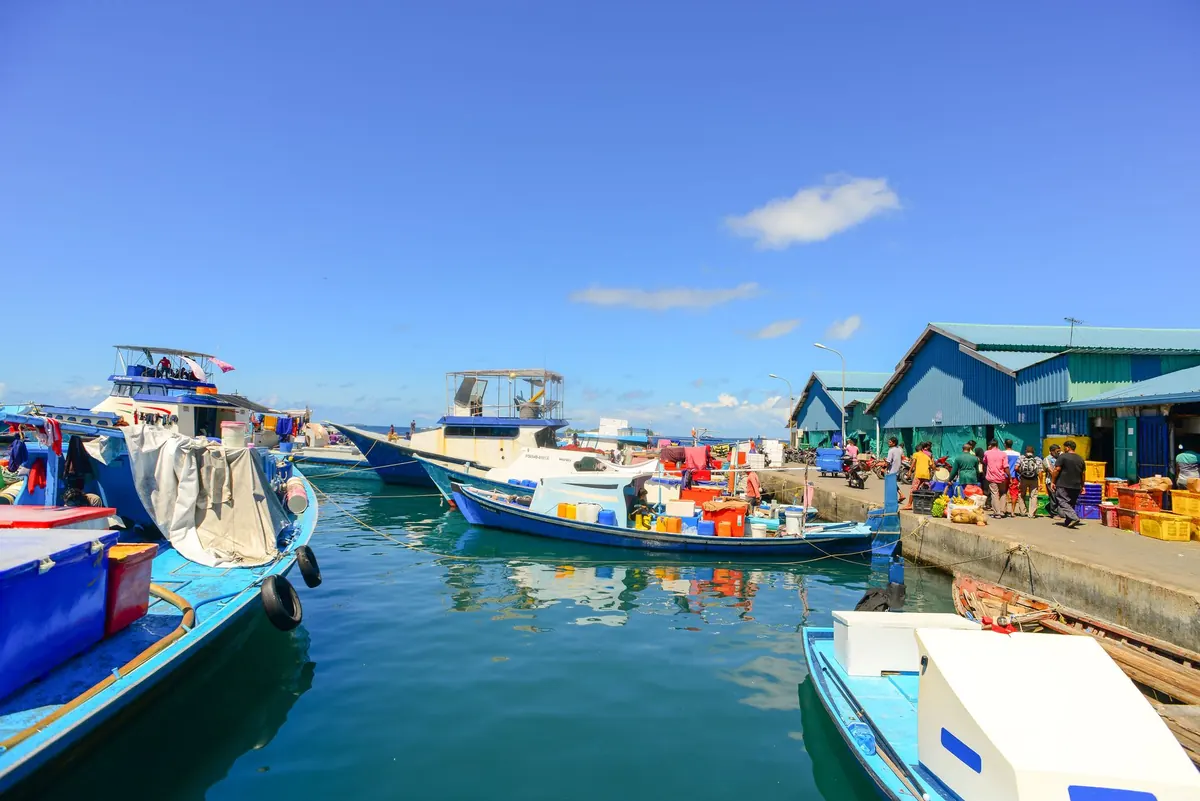
In working ports, the bottom is rarely uniform. Dredged channels sit deeper than the edges, and mooring basins are often deeper than the space between the quay and the first row of buoys. That is why you can sometimes see a soft line running across a harbor — a band of darker blue beside a band of greener water — that traces the edge of the dredged channel. Fishermen and ferry captains read those lines the way drivers read lane markings.
Why the Shallow Edges Look Greener
Walk to the corner of any marina and look down. Near the slipway, where the bottom rises, the water usually shifts from blue to green to a yellowish-green in the space of a few meters. Light bouncing off the shallow bottom passes through less water, so less red has been absorbed, and the green and yellow tones survive. Add a film of algae on the stones and you have a color that looks almost like a swimming pool — and is nothing of the sort.
Sediment: The Harbor's Own Palette
Now add particles. Every harbor holds fine silt, clay, sand and organic matter, and every harbor stirs them up from time to time. Suspended particles scatter light back toward the surface before it can travel deep, which flattens the blue and pushes the color toward green, gray or brown, depending on what the particles are made of.
Watch for these triggers:
- Heavy rain. Runoff from streets, yards and building sites carries fine soil into the basin. A harbor can go milky brown within an hour of a downpour and clear again in a day or two once the silt settles.
- River mouths. Where a river enters the port, you will often see a plume of tan or green water fanning out into the blue, with a visible boundary that shifts with the tide.
- Tide and current. Strong flow over a muddy bottom lifts sediment without any rain at all. Slack water is your best chance to see the harbor at its clearest.
- Boats and dredging. A ferry's wash or a dredger working the channel will cloud a whole basin for hours. It is worth waiting before you judge the water's color.
- Algae and weed. Green films on pilings, ropes and slipways are normal in warm, calm corners, especially in late spring and summer.
Weather, Wind and a Borrowed Sky
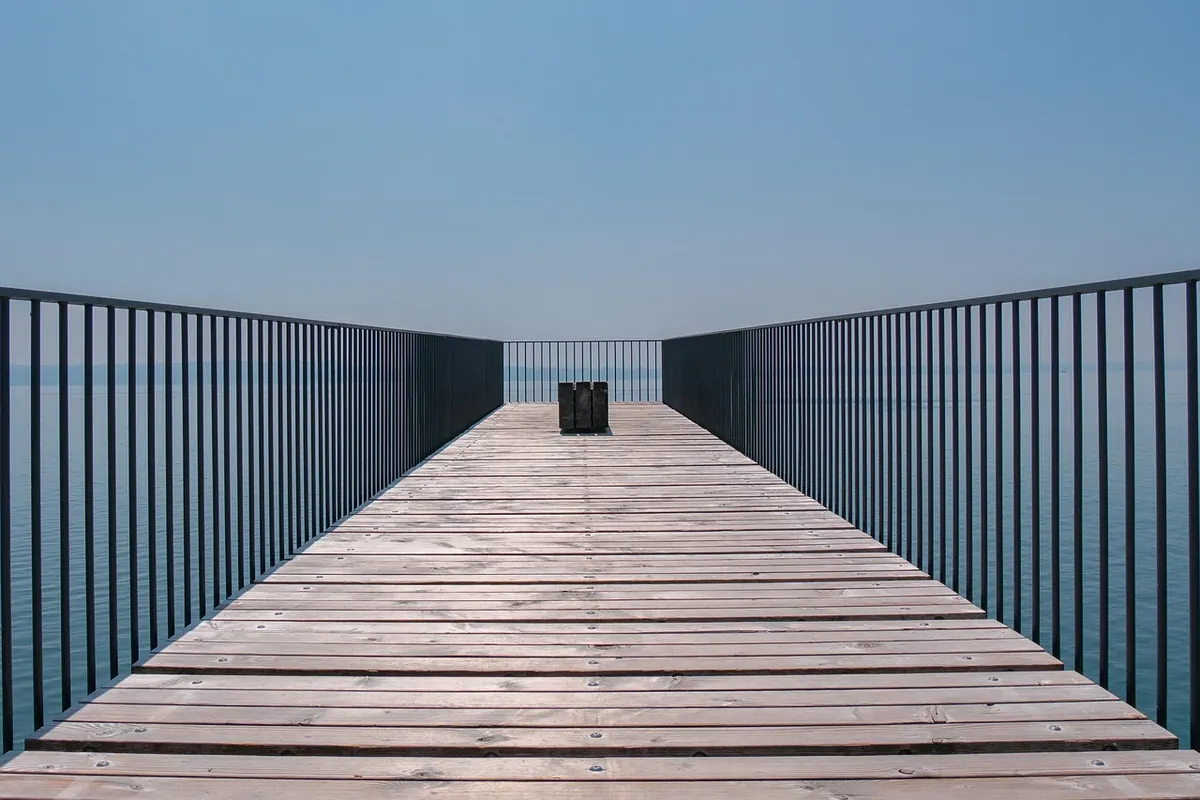
On an overcast day, the harbor borrows the color of the clouds. Gray sky, gray water — and not because anything has gone wrong. Flat white light reduces the contrast between reflected sky and the water's own color, so the basin reads as a single soft sheet of pewter.
Wind does something similar. A choppy surface is a field of small tilted mirrors, each one throwing a piece of sky at you. Add whitecaps and the overall impression brightens and desaturates. On a calm morning, by contrast, you can look straight down and see the bottom in three or four meters of water — the same water that looked opaque the day before.
Wind direction matters too. An onshore wind pushes clearer open-sea water toward the harbor entrance. An offshore wind, or a wind blowing across shallow flats, often brings the murk with it.
When Green Means Something Alive
Some of the green in a port is biological. Microscopic algae in the water contain chlorophyll, which absorbs blue and red light and reflects green. When they are abundant — warm, calm, nutrient-rich water, often in spring and late summer — the harbor takes on a pea-green or jade tint that no amount of depth or sky can explain.
This is normal in ports, which tend to be sheltered and enriched by everything that washes off the land. A bright green rim along the shallows, or a green haze over the weed beds, usually means a healthy, sunlit, sheltered habitat rather than a problem. Color tells you about light and particles. It does not tell you about water quality.
Reading the Water in a Minute: A Field Guide
Next time you are on the quay, run through this quickly and the harbor will start making sense.
- Look up first. Sky color and cloud cover set the baseline. Photograph the sky, not just the water.
- Check the surface texture. Glassy means you are seeing into the water; choppy means you are mostly seeing the sky.
- Find a shallow edge. Compare it with the middle of the basin. The difference is depth talking.
- Look for color lines. Sharp boundaries mark channels, river plumes and tidal fronts. Note which way they are drifting.
- Compare with the open sea just beyond the breakwater. If the outside is blue and the inside is green-gray, the port itself is responsible.
- Think back 24 hours. Rain, wind and dredging leave a mark that lasts a day or two.
Practical Notes for Your Next Walk on the Quay
If you want good photographs, go early or late but shoot along the water, not across it — a low angle catches reflections and skips the glare. If you want to see the color of the water itself, do the opposite: stand high, look steeply down, and shoot around midday when the sun is overhead. A polarizing filter cuts surface glare and reveals what is underneath, though on a mirror-calm day you may prefer the reflection.
Give yourself a reason to come back to the same spot at a different hour. Harbors change personality with the tide, the sun angle and the wind, and the variation is the point: a basin that looked gray and closed at breakfast can look clear and inviting by two in the afternoon.
One last caution worth keeping in mind. Clear, blue, beautiful water is not automatically clean, and brown or green water is not automatically polluted. Color describes light and particles. If you are thinking about swimming near a working port, check with the harbor authority or local municipality first rather than trusting your eyes.
Photo: heidi_ziller / Pixabay