October 18, 2026
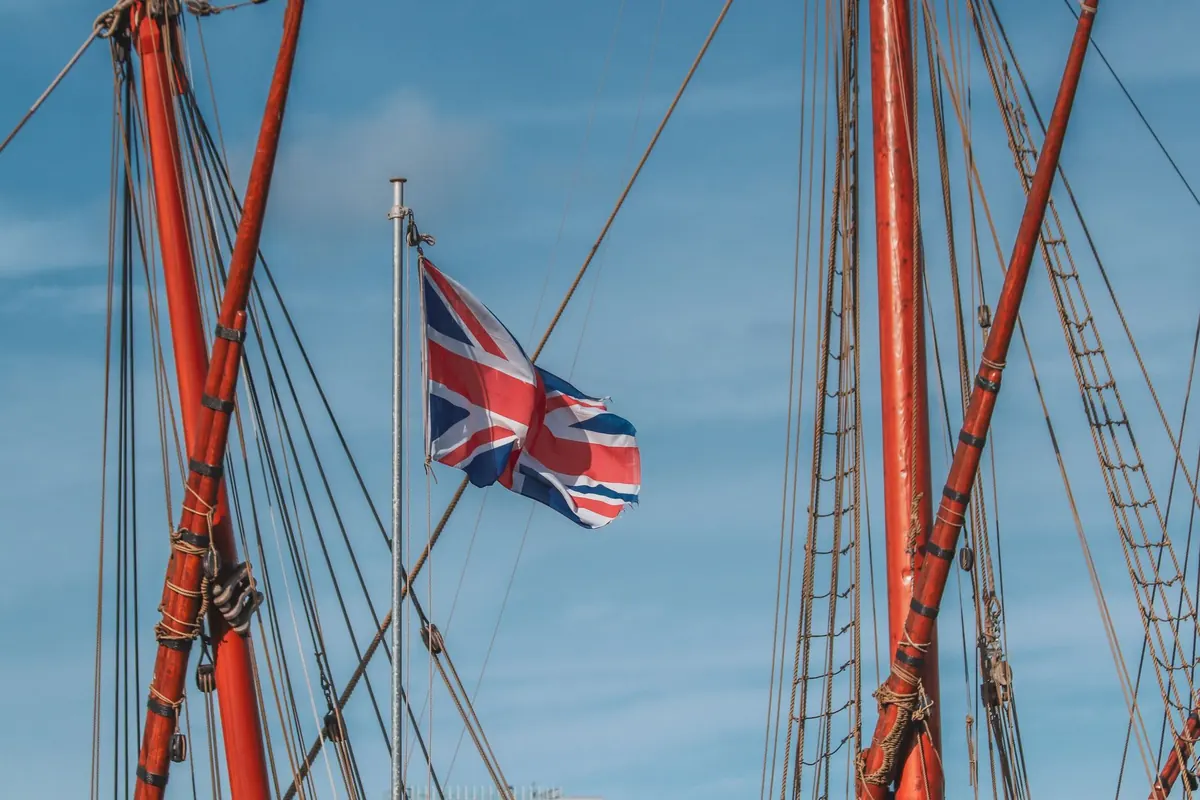
Stand at the railing of almost any working harbor and you will eventually see it: a tug sliding past with a small red swallowtail snapping from its masthead, or a yacht entering the channel with a yellow flag stiff in the wind. These are not decoration. They are sentences, flown in cloth, and they are still in daily use on quays and fairways all over the world. The good news for anyone watching from shore is that you do not need to learn forty flags to enjoy this. A dozen will carry you a long way, and the habit of looking up at the halyards adds a second layer to any harbor walk.
What the flags are actually for
The system you are looking at is the International Code of Signals, a set of letter and number flags that merchant and naval vessels use to talk to each other, to harbor control, and to the shore. It survives because it is cheap, needs no power, and works when radios are busy, language is a barrier, or a message needs to be visible to several vessels at once.
Single flags carry complete meanings on their own — a one-flag message is short and usually urgent or procedural. Two or three flags hoisted together form a more specific instruction. Numbered pennants handle figures: speeds, drafts, times, berth numbers. On top of all that, individual ports keep their own local signals, from tide and traffic lights to flags on a harbor mast that tell waiting vessels whether to enter. So when a flag does not match anything on your reference sheet, it may simply belong to the port rather than the international code.
Learn the shape before the color
Beginners tend to squint at color first. Train yourself to notice outline instead, because shape narrows the options faster than any other clue.
- Rectangular flags make up most of the alphabet. Some are solid, some striped, some divided into quarters.
- Swallowtails have a notch or taper cut into the fly, the edge away from the halyard. Several of the most important "keep clear" flags are swallowtails.
- Pennants are long and narrow, either tapering to a point or ending in a short swallowtail. Numbers are pennants, and a few letters are too.
The answering pennant, red and white in vertical stripes, is worth recognizing on sight: it is used to acknowledge a signal received, so seeing one tells you a conversation just happened.
Colors and patterns that do the talking
The palette is deliberately limited: red, white, blue, yellow and black, with no shades to argue about. That is a gift to a shore observer with binoculars. Learn the pattern families — vertical stripes, horizontal stripes, quarters, diagonals, crosses, plain fields — and you can describe almost any flag to yourself in four words before you decide what it is.
Two practical notes. Faded flags lie: a sun-bleached red can look salmon pink, and blue goes grey. Look at the windward edge, which takes less sun, and compare against a neighboring flag whose colors you trust. And a flag streaming directly away from you is almost impossible to read, so note the wind first. Flags hang downwind; position yourself accordingly, or wait for a lull when the cloth drops and the full pattern shows.
The flags you will meet most often
These come up again and again in commercial harbors. Meanings below are the standard single-flag messages, though a few have special senses for fishing vessels.
- Bravo — red swallowtail. The vessel is loading, discharging or carrying dangerous goods. Common around tankers and chemical berths.
- Alpha — white and blue swallowtail. A diver is down; keep well clear and slow down. Watch for it near survey boats and marina works.
- Quebec — plain yellow. The vessel is healthy and requests free pratique, the clearance to interact with the shore. Historically the quarantine flag, and still flown on arrival.
- Hotel — white and red vertical halves. A pilot is on board. You will often see it on ships that have just crossed the harbor bar.
- Delta — a narrow yellow-and-blue pennant. Keep clear; the vessel is maneuvering with difficulty. Frequently paired with other flags on tugs and dredgers.
- Lima — yellow and black quarters. You should stop your vessel instantly. A serious message, and rarely flown for long.
- Mike — blue with a white saltire. The vessel is stopped and making no way through the water.
- Victor — white with a red cross. I require assistance. Seeing it on a small craft in a freshening breeze is a prompt to find the harbor office, not to film.
- Oscar — yellow and red divided diagonally. Man overboard.
- Charlie and November — the multicolored horizontal stripes and the blue-and-white checkerboard. Yes and no, the workhorses of any exchange.
Not every flag is a signal, either. National flags, small courtesy flags of the host country, and shipping company house flags fly from sterns and yardarms all day. If a flag is hoisted in a fixed spot and stays there for the whole visit, it is probably identity, not instruction.
Reading a hoist, top to bottom
A group of flags on one halyard is read from the top down, as one message. Two flags are the most common hoist in port; three or more usually carry a specific instruction or a set of figures. Numbers appear as pennants, and a tight cluster of them often means draft, length or speed — the practical arithmetic of moving a ship safely.
Vessels rarely carry two identical flags, so the code includes substitute pennants that stand in for a repeat of a flag earlier in the same hoist. If a hoist looks like it has a pennant in the middle that matches nothing on your sheet, you are probably looking at a substitute rather than a letter.
The most useful skill is not memorizing but noticing change. A flag going up or down marks a moment: a pilot boarding, a vessel cleared to enter, a shift ending, a tide turning. Watch what the ship or the harbor launch does in the next few minutes and the meaning usually explains itself.
A short routine for your next harbor walk
You do not need a course to start. Use this sequence and you will read more each visit.
- Check the wind direction first, so you know which side of each flag you are seeing.
- Look for hoists on mastheads and yardarms, and note how many flags are grouped together.
- Name the shape, then the pattern, then check a printed or downloaded code sheet. Carry a paper one; screens in bright sun are hopeless.
- Pick one flag per visit and follow it. Ten minutes of watching a single halyard teaches more than an hour of scrolling.
- Photograph the harbor's own signal mast and compare it with the port's published information, if there is any at the entrance or online.
A last piece of etiquette. Signal flags are working messages, and the crews reading them are on the job. Keep clear of loading areas and lock gates, do not walk into traffic lanes for a better angle, and if a flag suggests an emergency — Victor, Oscar, a diver in the water — stay out of the way and let the harbor do its work. Learn the dozen flags above, keep a code sheet in your bag, and the working port will start to read like a conversation you can follow.